The retro lane is a workshop, not a museum shelf.
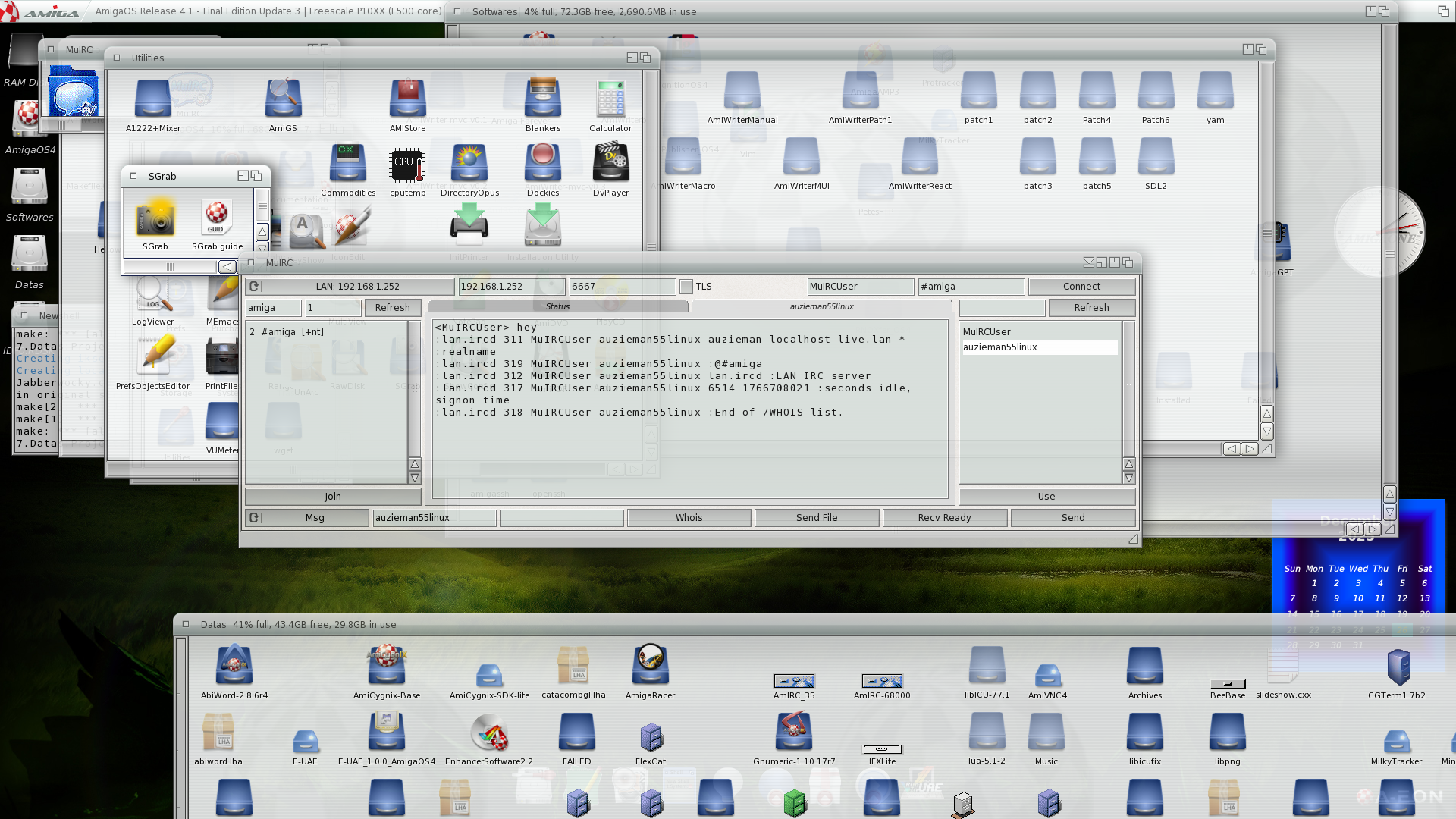
The AmigaOS projects around Auzietek are small on purpose: IRC clients, text editors, build experiments, UI toolkit comparisons, packaging notes, and screenshots from real test loops. They are compact enough that a person can understand the whole shape, but tricky enough to teach useful engineering habits.
Why these projects matter
Classic-platform work forces practical questions:
- which library owns this object?
- what does the event loop actually do?
- where does the file live?
- how does the program launch from the desktop?
- what happens when a network call fails?
- how do you move a build from a modern workstation to an older target?
Those questions are not obsolete. They show up again in containers, hypervisors, embedded systems, remote labs, and infrastructure automation.
Project cluster
The current public repo cluster includes:
- MuIRC — an AmigaOS 4.1 MUI IRC client experiment with a plugin-shaped protocol layer.
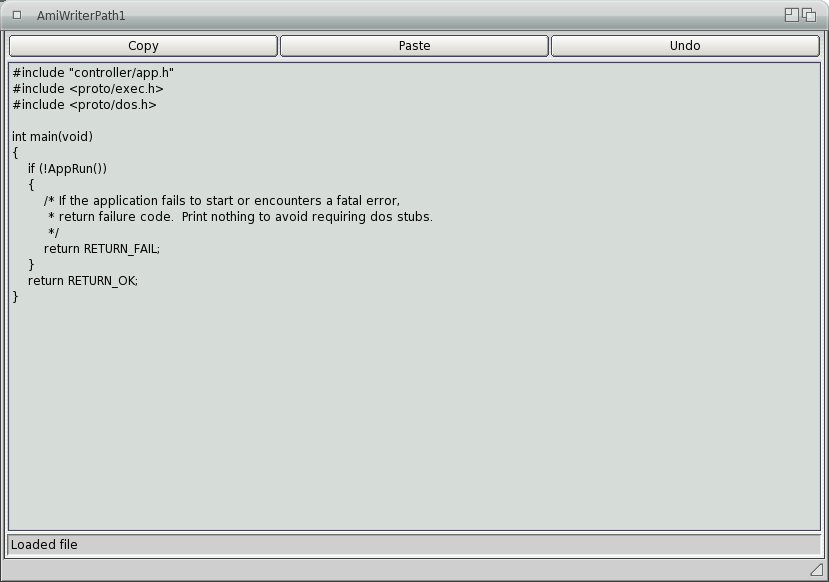
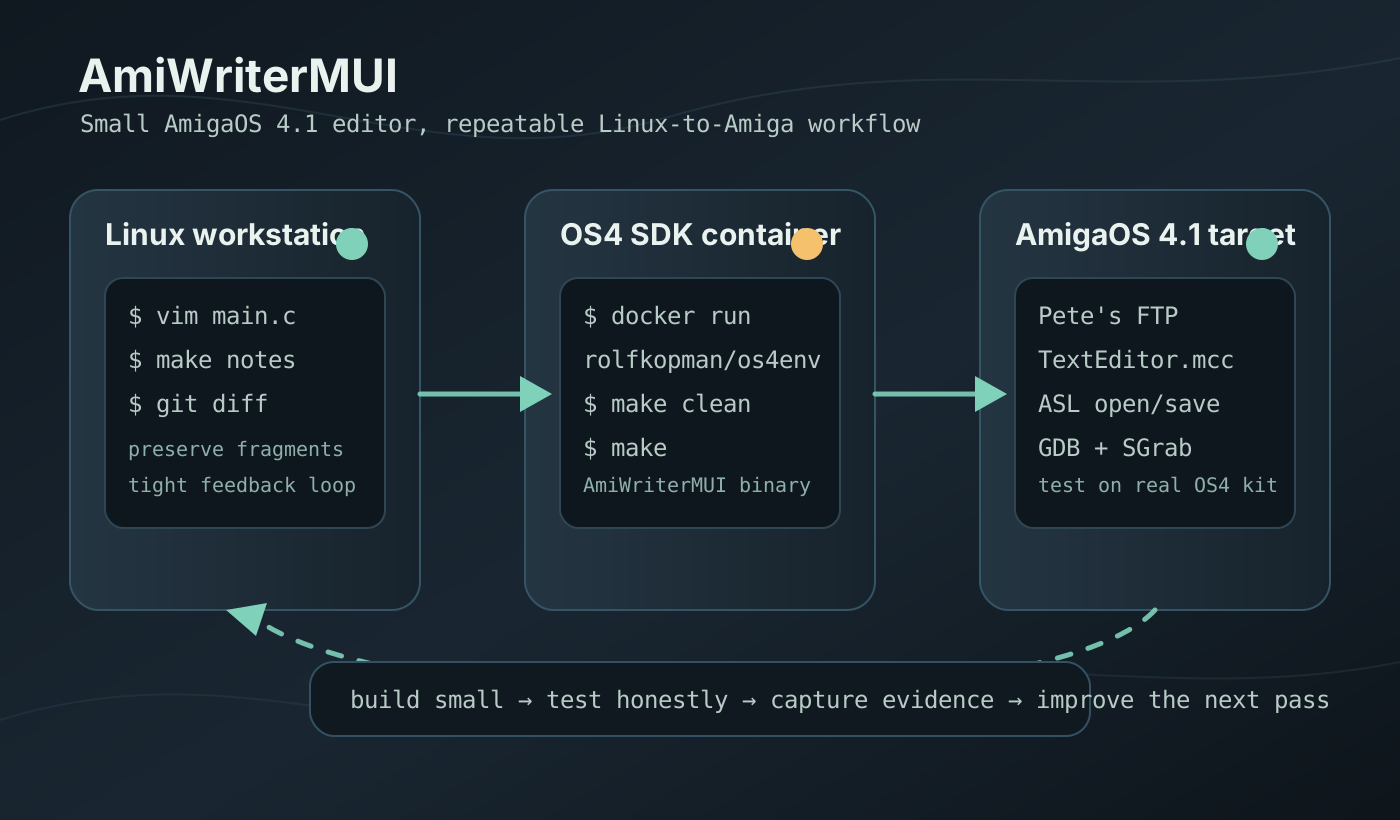
- AmiWriterMUI — a small MUI/TextEditor.mcc editor example with open/save, tabs, drag-and-drop, and syntax-coloring experiments.
- AmiWriterReact — a ReAction text editor path that compares another AmigaOS UI model.
- AuziX — a next-era workstation OS experiment with Amiga, GoboLinux, Slackware, and reproducible-build inspiration.
The assisted-development angle
AI helps most when the target is unfamiliar but bounded, and when the human keeps testing against the real machine.
Codex can draft a small C structure, explain a compiler error, compare a MUI path against a ReAction path, or turn a crash log into a focused next test. It does not replace the real target machine. The Amiga still gets the final vote: the UI either feels right on the target, or it does not.
That pairing is the useful lesson:
human taste + real target + AI-assisted iteration + preserved notes
That pattern is exactly the same one Auzietek is applying to infrastructure automation. The domain changes. The loop stays familiar.
There is also a wider retro-computing moment happening here. AmiWest and the Amiga community are beginning to talk openly about AI-assisted Amiga development, which makes these little projects less like isolated experiments and more like early field notes.
Video lane: AI-assisted Amiga and retro development playlist.