AmiWriterMUI is a small editor experiment for AmigaOS 4.1 using MUI-style interface ideas.
That may sound niche, but niche platforms are often excellent classrooms. They make the relationship between toolkit, event handling, files, memory, and user expectations easier to see.
The lesson is not nostalgia
The lesson is constraint.
Modern software can hide a great deal behind frameworks, package managers, and giant runtime stacks. Older environments ask the developer to be more explicit:
- what is allocated?
- who owns it?
- when does the UI update?
- how does the file get saved?
- what happens when the user does the unexpected?
Those questions still matter everywhere.
Where Codex helps
Codex can help turn a half-remembered platform into a working checklist:
- sketch the structure;
- identify the API shape;
- generate a small first pass;
- explain compiler errors;
- revise from real test results.
The useful pattern is the same one Auzietek uses in infrastructure work: make a small change, test it, preserve the fragment, and improve the next run.
What we built
- MUI application scaffold and menus.
- TextEditor.mcc integration.
- File open/save through ASL.
- Tabs for multiple files.
- Clipboard history.
- Drag-and-drop file open.
- Theme switching and recolor experiments.
- A growing README and concept notes so the work can be repeated.
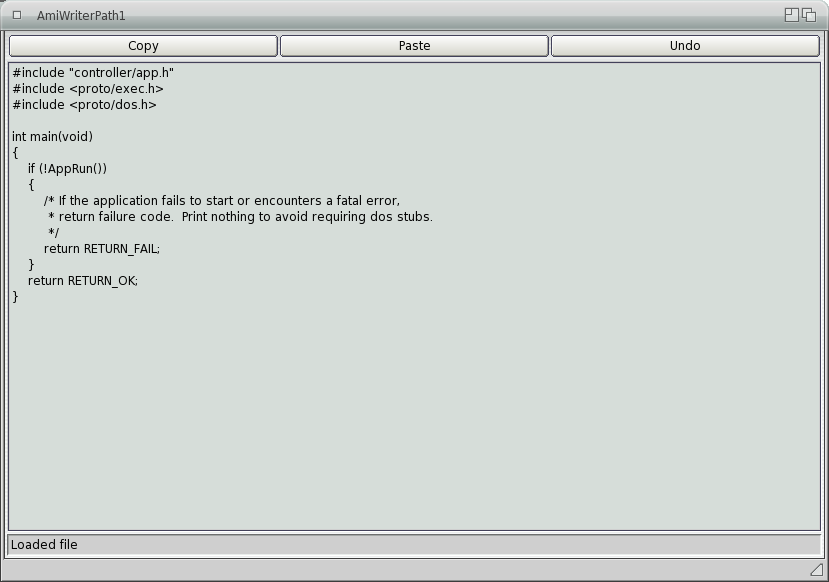
The screenshots matter because this work is not just a retro-themed writing exercise. It is the evidence that the build loop produced visible software on a real AmigaOS-style target. A small editor is enough surface area to expose real toolkit questions: menus, file requesters, text buffer state, event callbacks, clipboard behavior, font assumptions, and the little places where a modern developer expects the framework to quietly solve the problem.
The build-and-test loop
The workflow stayed deliberately practical:
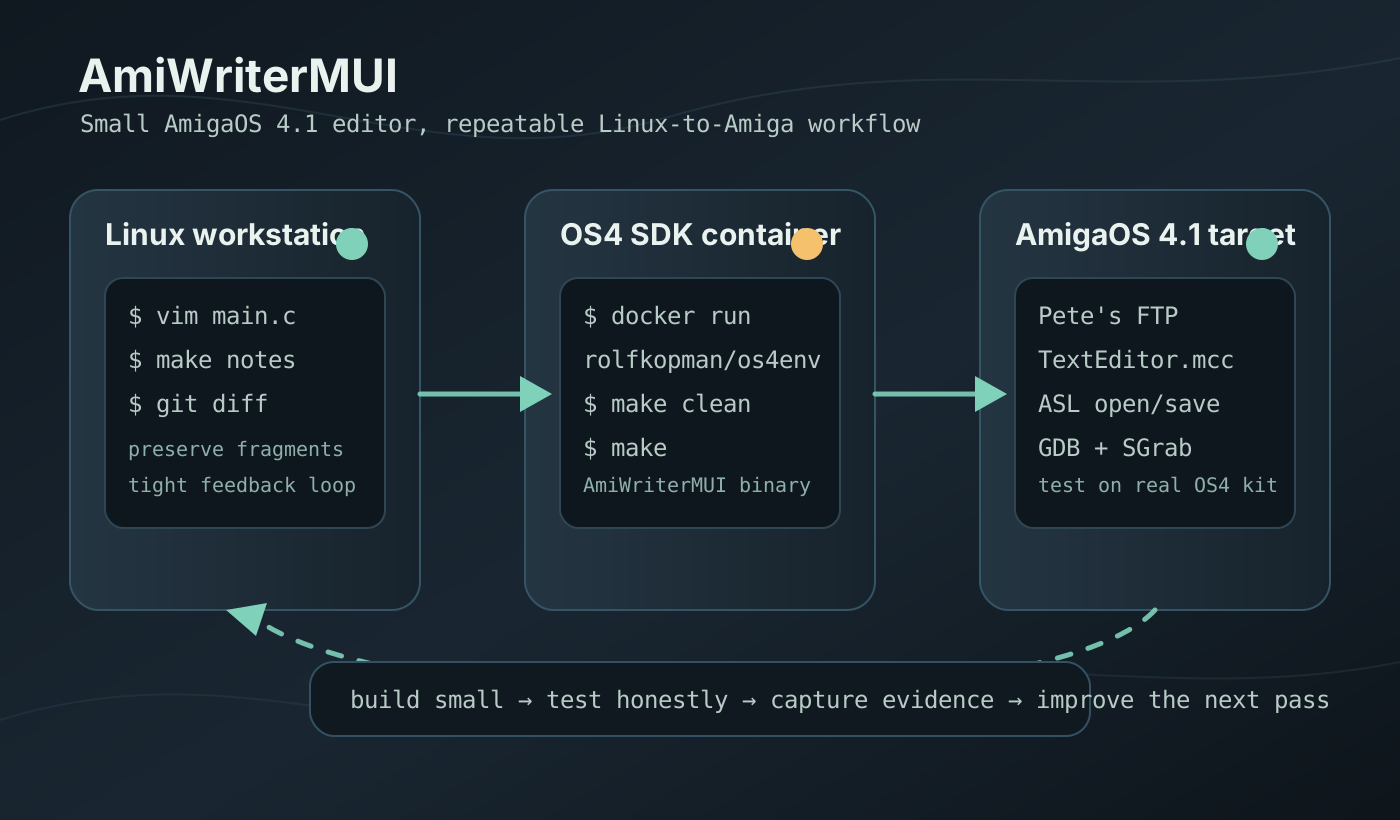
- edit on Linux;
- cross-compile with the OS4 SDK container;
- move binaries and screenshots with Pete's FTP;
- test on AmigaOS 4.1 / A1222 hardware;
- capture screenshots and notes;
- repeat in small steps.
sudo docker run --rm -v /home/auzieman/Projects:/Projects \
  rolfkopman/os4env /bin/bash -lc "cd /Projects/AmiWriterMUI && make clean && make"
When something crashed or behaved oddly, the target-side GDB loop was enough to keep the next step focused:
gdb --args AmiWriterMUI
run
bt full
Why this belongs beside the infrastructure work
The Amiga lane and the BlackKnightController lane look different on the surface, but the operating habit is the same:
small change
  -> build
  -> test on the real target
  -> capture the result
  -> preserve the working fragment
  -> repeat
That habit scales from a tiny MUI editor to a bare-metal hypervisor lab. The tools change. The discipline does not.
Video lane: Auzietek retro development playlist.
Repo: AmiWriterMUI on GitHub.