AmiWriterReact is the sibling experiment to AmiWriterMUI: another small editor, another UI toolkit path, another chance to learn from a platform where the layers are close enough to touch.
That closeness is valuable.
When the stack is smaller, design decisions feel more immediate. The program either responds cleanly or it does not. The file either saves correctly or it does not. The interface either fits the system's habits or it feels wrong.
Comparing toolkit paths
Trying more than one toolkit is useful because it separates the application idea from the framework choice.
For a small editor, the core needs are stable:
- create a window;
- accept text input;
- open and save files;
- report errors clearly;
- exit without losing work.
The toolkit changes how those needs are expressed.
Why modern engineers should care
That same separation matters in current systems. Whether the target is a web framework, a container platform, a hypervisor API, or a monitoring stack, the engineer should understand the job before becoming loyal to the wrapper.
Retro projects like AmiWriterReact keep that muscle sharp.
Build, test, and show the work
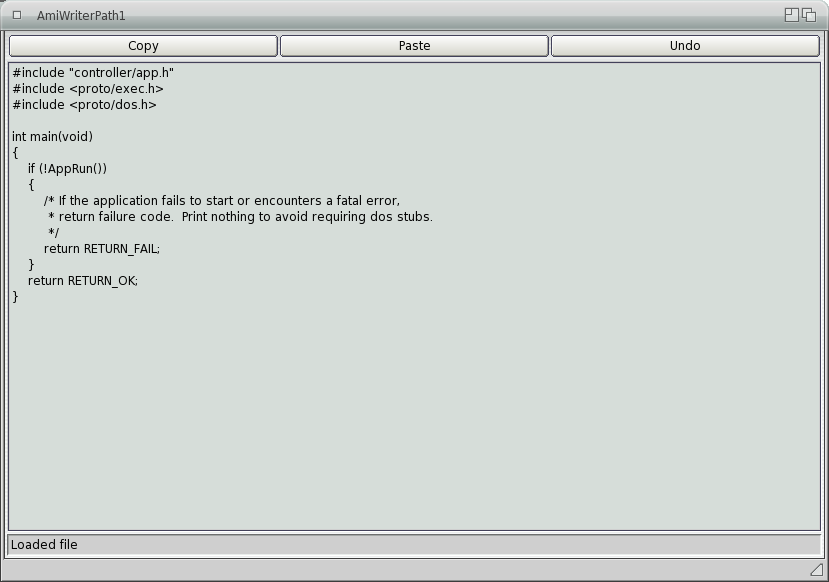
The ReAction version keeps the app split across controller, model, and view
code, while the MUI version leans into a compact tutorial-style main.c. That
comparison is part of the value: same small editor goal, different AmigaOS UI
toolkit habits.
cd AmiWriterReact
make
The original walkthrough is still useful for seeing the project in motion: AmiWriterReact video walkthrough.
More related clips are collected in the Auzietek retro development playlist.
Repo: AmiWriterReact on GitHub.